Project 1.8.1: Smart lightening system with RGB module.
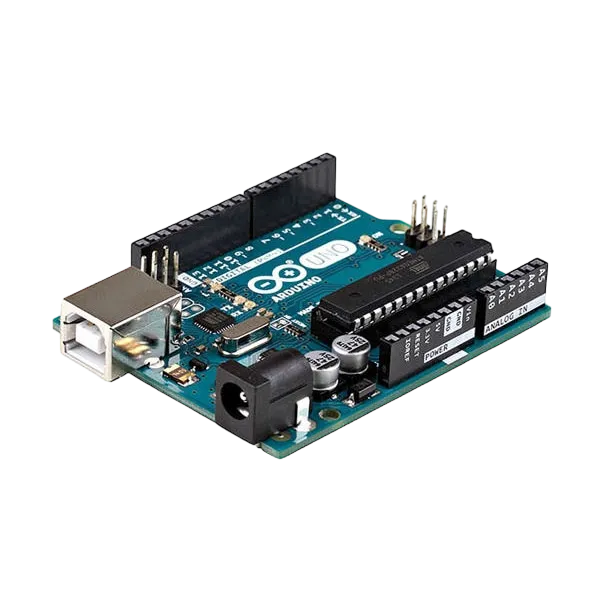
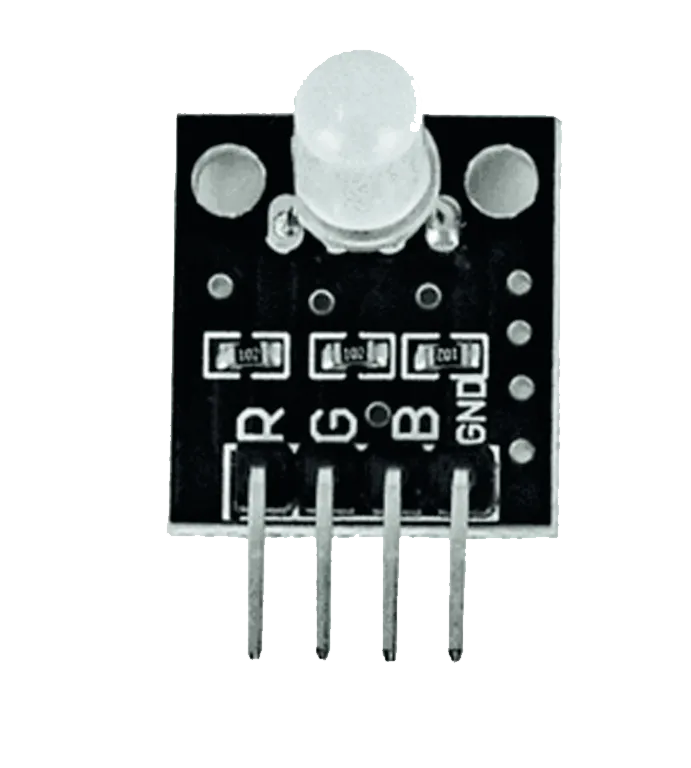
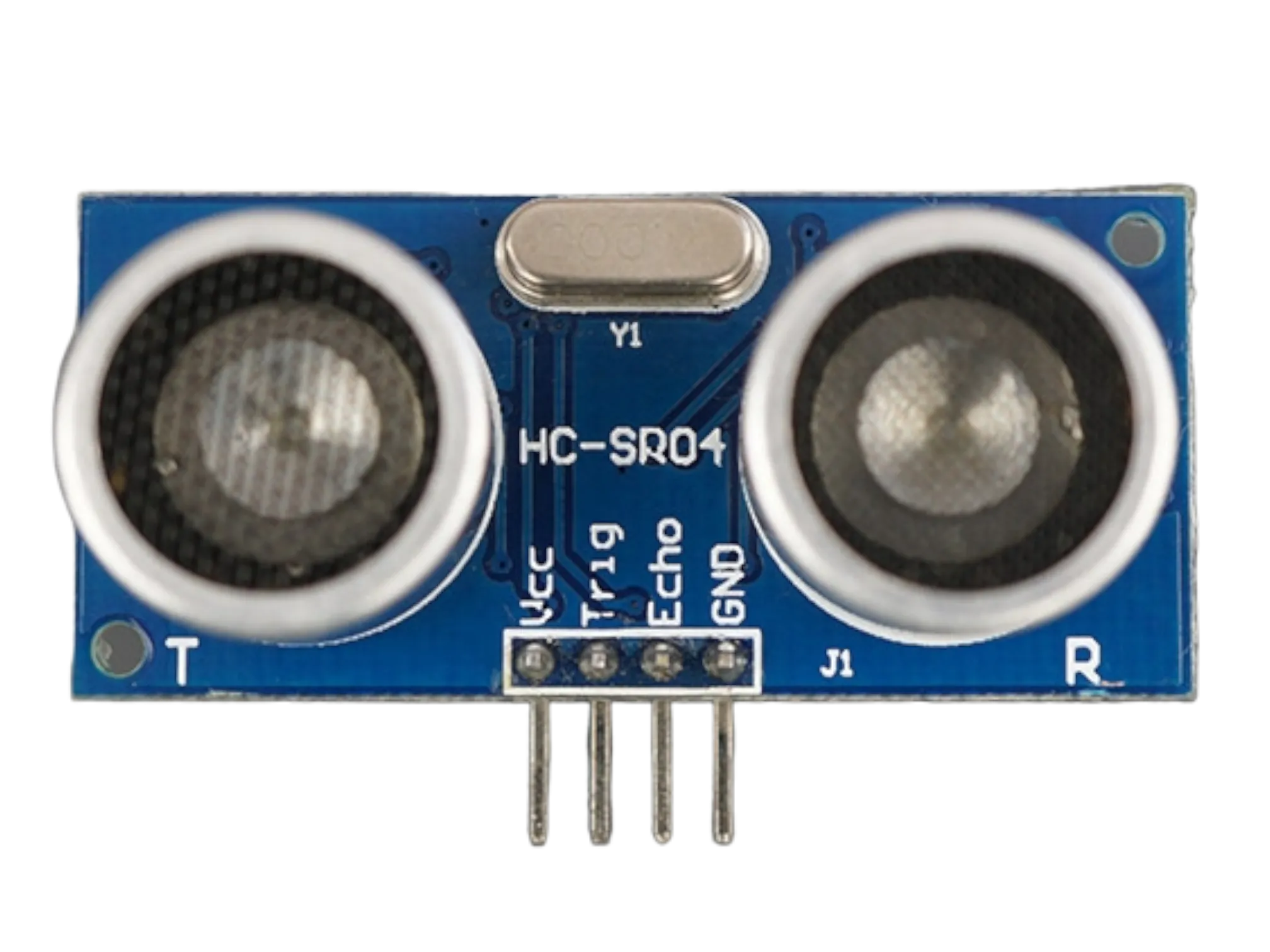
| Description | This project shows how to use an ultrasonic sensor and an RGB module with an Arduino Uno. The RGB lights change when an object comes close to the ultrasonic sensor. |
|---|---|
| Use case | This project can be used as a smart lighting system where different colours appear depending on the distance detected by the ultrasonic sensor. |
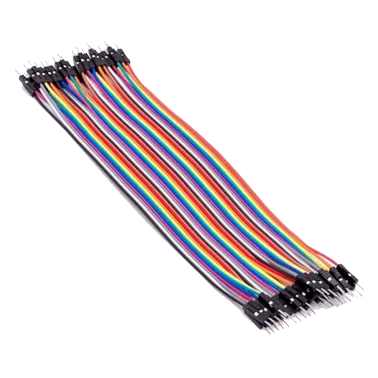
Components (Things You will need)
 |
 |
 |
 |
 |
 |
|---|---|---|---|---|---|
Mounting the component on the breadboard
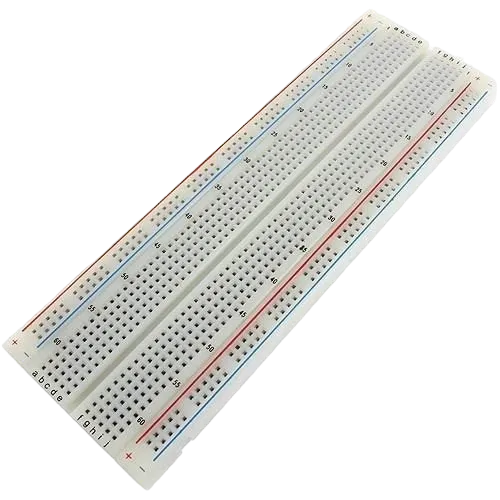
Step 1: • Place the ultrasonic sensor on the breadboard.
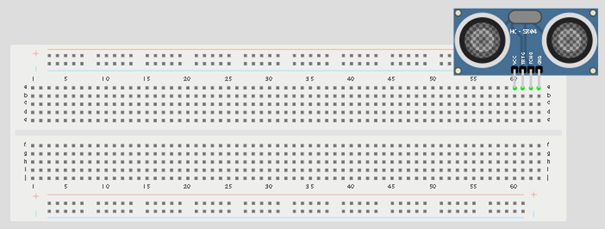 .
.
Step 2: Connect the Echo pin of the ultrasonic sensor to pin 2 on the Arduino Uno.
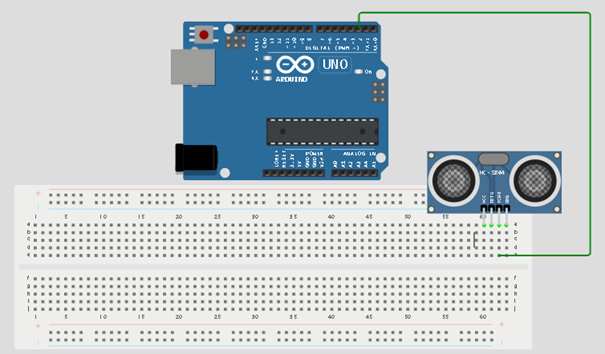 .
.
NB:Take note of where each of the pins are placed on the bread board.
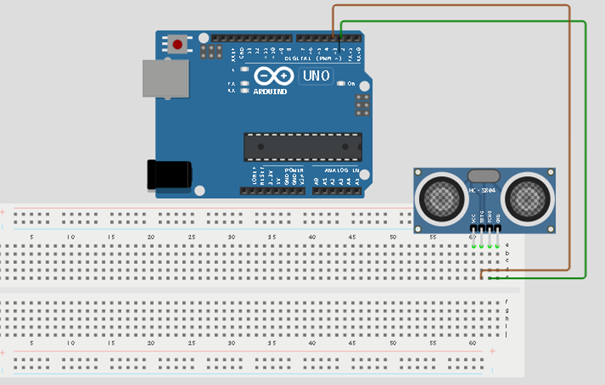
Step 3: Connect the Trig pin of the ultrasonic sensor to pin 3 on the Arduino Uno.
 .
.
NB:Take note of the digital pin you allocated to the trig pin.
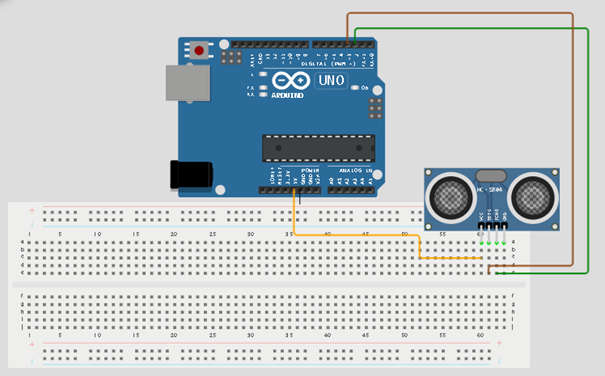
Step 4: Connect the VCC pin of the ultrasonic sensor to the 5V pin on the Arduino Uno.
 .
.
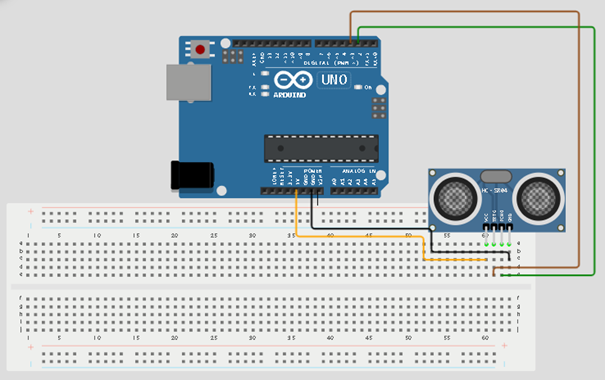
Step 5: Connect the GND pin of the ultrasonic sensor to GND on the Arduino Uno.
 .
.
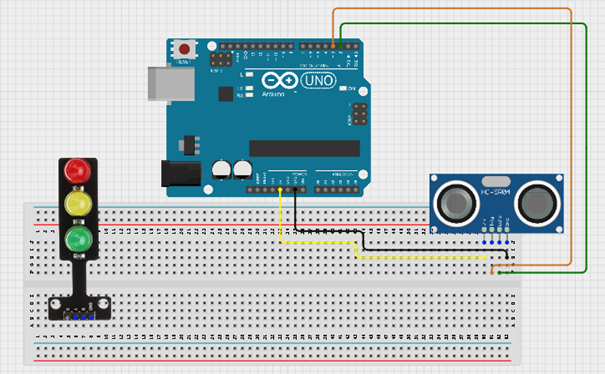
Step 6: Place the RGB module on the breadboard.
 .
.
Step 7: Connect the Red pin of the RGB module to pin 4 on the Arduino Uno.
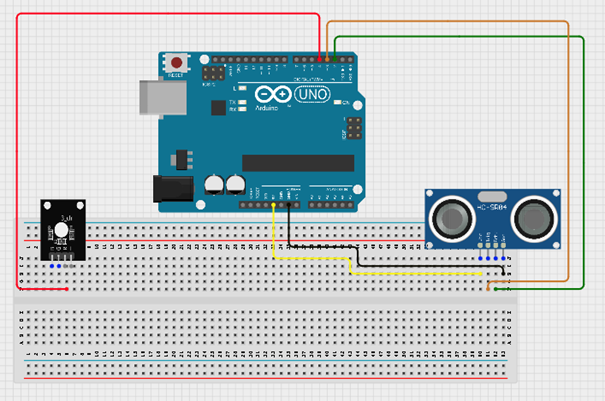 .
.
Step 8: Connect the Green pin of the RGB module to pin 5 on the Arduino Uno.
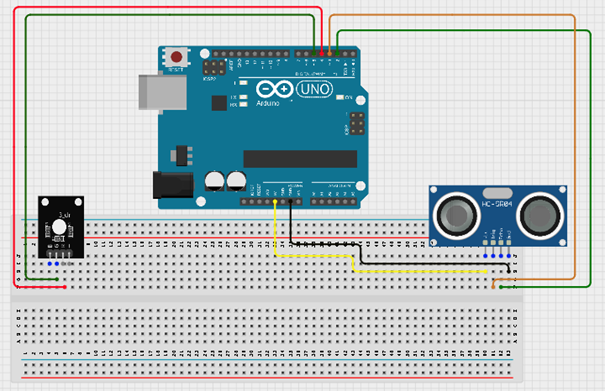 .
.
Step 9: Connect the Blue pin of the RGB module to pin 6 on the Arduino Uno.
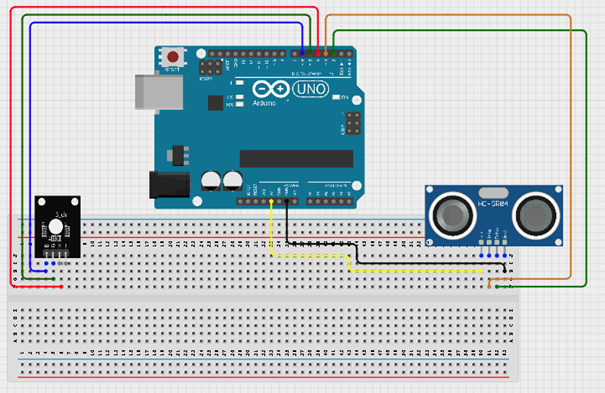 .
.
Step 10: Connect the GND pin of the RGB module to GND on the Arduino Uno.
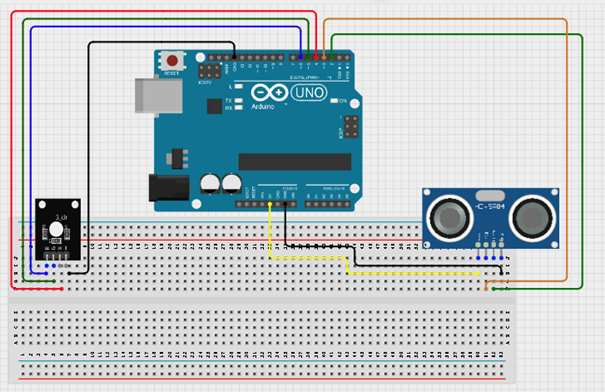 .
.
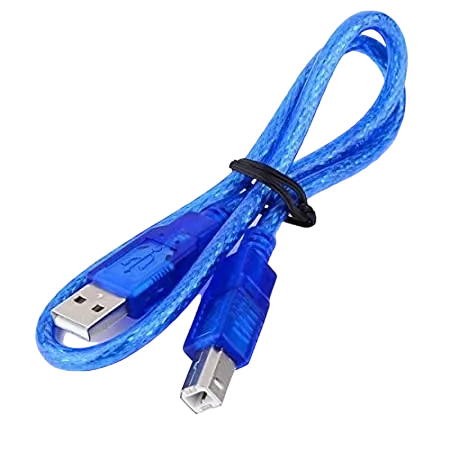
Step11: After wiring, connect the Arduino Uno to the computer using the USB cable.
PROGRAMMING
Step 1: Open your Arduino IDE. See how to set up here: Getting Started.
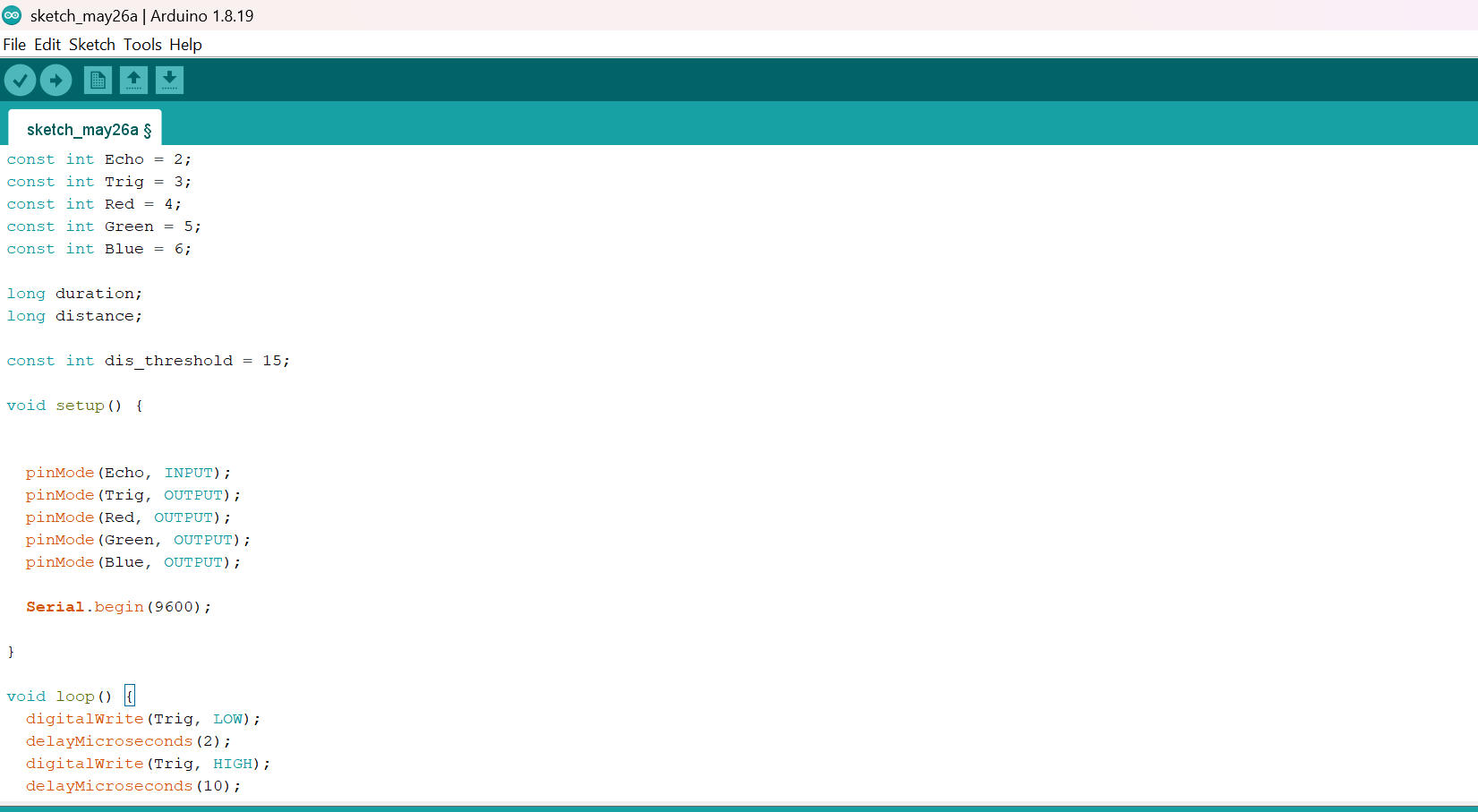
Step 2: Type const int Echo = 2;
as shown below in the picture below: on line one before void Setup() function.
Step 3: Type int Trig = 3;
as shown below in the picture below: on line one before void Setup() function.
Step 4: Type int Red = 4;
as shown below in the picture below: on line one before void Setup() function.
Step 5: Type int Green = 5;
as shown below in the picture below: on line one before void Setup() function.
Step 6: Type int Blue = 6;
as shown below in the picture below: on line one before void Setup() function.
Step 7: Type long duration; and Type long distance;
as shown below in the picture below: on line one before void Setup() function.
Step 8: Type
const int dis_threshold = 15;
as shown below in the picture below: on line one before void Setup() function.
NB: Make sure you avoid errors when typing. Do not omit any character or symbol especially the bracket {} and semicolons; and place them as you see in the image. The code that comes after the two ash backslashes “//” are called comments. They are not part of the code that will be run, they only explain the lines of code. You can avoid typing them.
Step 9:Type this in the void setup{}
pinMode (Echo, INTPUT);
pinMode (Trig, OUTPUT);
Serial.begin (9600);
pinMode (Red, OUTPUT);
pinMode (Blue, OUTPUT);
pinMode (Green, OUTPUT);
Step 10: Ttpe this in the void loop{}
digitalWrite (Trig, LOW);
delay (2);
digitalWrite (Trig, HIGH);
delay (10);
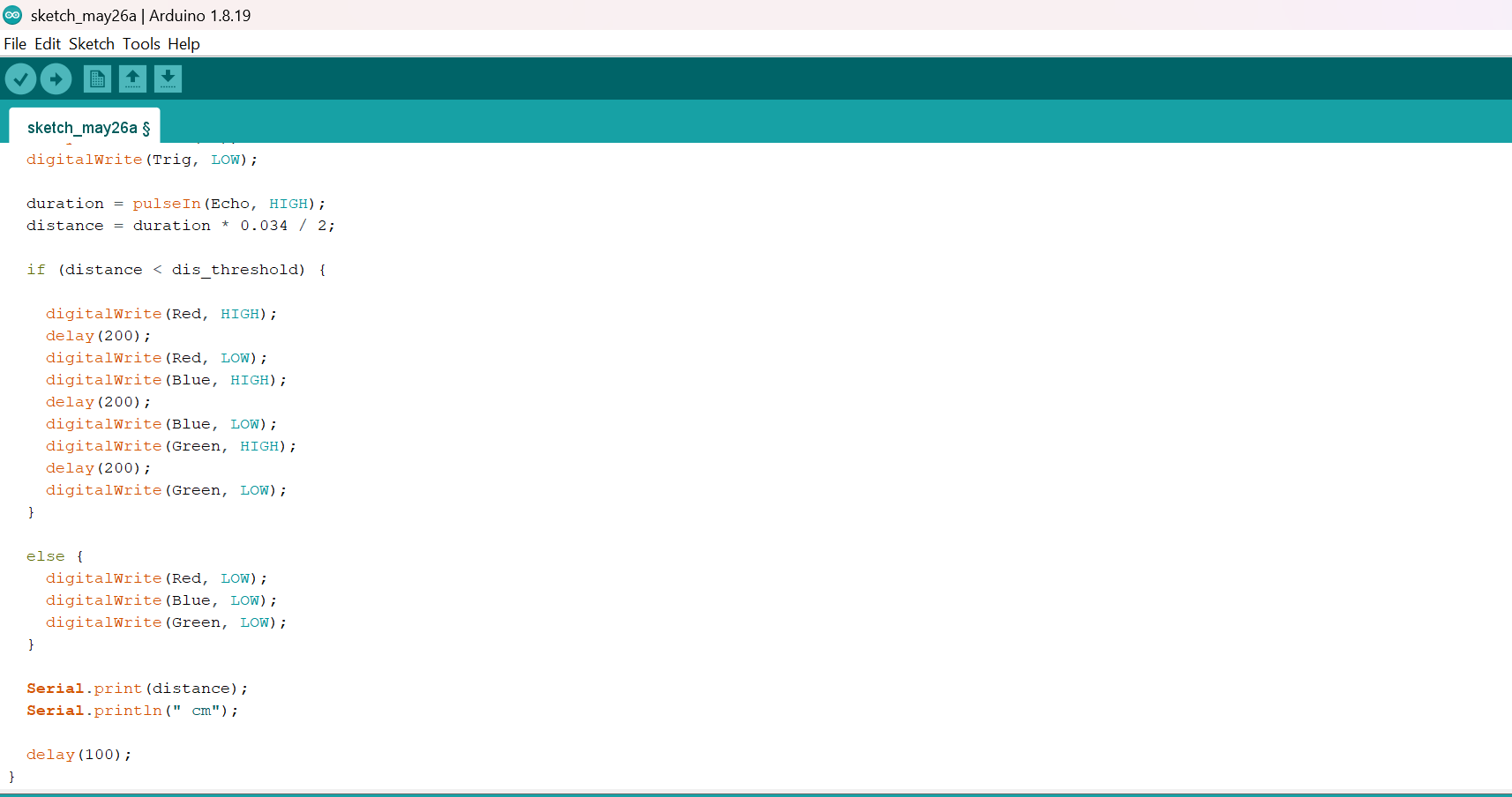
digitalWrite (Trig, LOW);
duration = pulseIn (Echo, HIGH);
distance = duration * 0.034/2;
Step 11: Type This Function as shown in the image below.
if (distance < dis_threshold) {
digitalWrite (Red, HIGH);
delay(200)
digitalWrite (Red, LOW);
delay(200)
digitalWrite (Blue, HIGH);
delay(200)
digitalWrite (Blue, LOW);
delay(200)
digitalWrite (Green, HIGH);
delay(200)
digitalWrite (Green, LOW);
else{
digitalWrite (Red, LOW);
digitalWrite (Blue, LOW);
digitalWrite (Green, LOW);
}
Serial.print (distance);
Serial.println (“cm”);
delay (100);
distance = duration * 0.034/2;}
as shown in the picture below.
 .
.
 .
.
Uploading your code
Step 1: Save your code. See the Getting Started section
Step 2: Select the arduino board and port See the Getting Started section:Selecting Arduino Board Type and Uploading your code.
Step 3: Upload your code. See the Getting Started section:Selecting Arduino Board Type and Uploading your code
Step 4: Click on the serial monitor icon to view the amount of sound being recorded as shown in the picture below:
OBSERVATION
The Serial Monitor displays distance values continuously. When an object comes close to the ultrasonic sensor, the RGB module lights up in different colours.
CONCLUSION
This project helps learners understand how to combine sensors and RGB modules using Arduino. It introduces distance measurement, smart lighting systems, and colour control in electronics and programming.